Friday, September 25, 2015

Sepia Saturday: Uncle Renza

Sepia Saturday challenges bloggers to share family history through old photographs.


This week’s Sepia Saturday photo is of sisters and their dogs on the steps of a mansion. About 1935, someone snapped a picture of my mother and her brother and their dog Fritz on the front steps of someone’s home which was anything but a mansion. The smiling gentleman was their grandfather’s brother known among family as “Uncle Renza.”

Lorenza Davis, Mary Eleanor Davis, Orvin Davis Jr, and Fritz Shenandoah, VA about 1935-36  http://jollettetc.blogspot.com
"Uncle Renza" (1871-1947)
my mother Mary Eleanor Davis and her brother Orvin Jr.
and of course, Fritz

Apparently Uncle Renza was an object of pity. He seemed to be poor. My mother thought maybe he was divorced. He would show up and then disappear. But those are the recollections of a child. Just what was Uncle Renza’s story?

He was born Lorenza Ridell McKinley Davis in 1871, the thirteenth of fifteen children of Mitchell and Martha Willson Davis of Rockingham County, Virginia. He obtained a sixth grade education, which was the typical length of education in rural parts of the state at that time. In August 1892, he married Chillis/Chelie Ann Shiflett of Greene County.

By 1900, Lorenza and Chelie or Anne or Anna, whatever she went by, were the parents of four children under the age of six. As was typical of women of the time, Anne took care of the household in their rented home in Augusta County while her husband worked as a farm laborer, likely on someone else’s farm.

Company houses at the logging camp near Boyer
photo courtesy Cass Scenic Railroad State Park
cassrailroad.com
Apparently there was more opportunity in the remote Pocahontas County in West Virginia. The steam railroad had finally reached those mountains, enabling the growth of commercial timbering. By 1910, the Davis family had moved into a rental home in Boyer Village, a logging camp in the Green Bank district where Lorenza and most of his neighbors were employed by the West Virginia Pulp and Paper Mill.

In the census record for that year, Lorenza and Anne could boast that all six of six children were still living. But something must have happened to the family after 1910. Lorenza and Anne are nowhere to be found in either the 1920 or 1930 census. None of the usual creative spellings and combinations have produced a hit. Maybe it was true – maybe they divorced and maybe Anne remarried. Nevertheless, that does not explain Lorenza’s disappearance.

Most of their children did not show up in 1920 or 1930 either. Those that did were married but apparently did not take their parents in.

Incorrect information on the children’s later marriage and death records led me to search using the names “Lorenzo McKinley” and “Alonzo Davis.” Still nothing.

Death Certificate Chelie Anne "Anna" Shiflett Davis 1939  http://jollettetc.blogspot.com
Death Certificate for Chelie Anne Shiflett Davis


Virginia death records recently released on Ancestry.com provided a few answers while sparking new questions. Anne’s whereabouts were confirmed: at least by 1939 and in failing health, she moved to Covington, Virginia, likely near, if not with, her daughter Bessie Weiford who was the informant on Anne’s death certificate. The answer to the question of whether she and Uncle Renza were divorced seems to be “No.”


However, in the 1940 census, Uncle Renza claimed he was Single. Yet at his death in 1947, he was a widower according to his death certificate.

For a few years at least, Uncle Renza seemed to be getting by. He owned his home, but it was valued at only $100 while his neighbors’ homes were valued between $1200 and $6000. At age 69, he was still employed - as a laborer for a private family. That probably translates as “handyman.” He was already past the age of normal working years, so there is no telling how much longer he was able to work.

As meager as Uncle Renza’s life seems to have been, his circumstances must have taken a grim turn. The informant at his death was not one of his children, not a sister or brother, not even a family friend.  It was the Department of Public Welfare in Fairfax, Virginia.

Death Certificate Lorenza Ridell McKinley Davis 1947  http://jollettetc.blogspot.com
Death Certificate for Lorenza Ridell McKinley Davis

Whether he had been a long-time recipient of public assistance or had merely fallen on hard times in his declining years is not known. At any rate, my mother’s recollections of a “poor uncle” must have been right.

Why don’t you and your sister take the dog for a walk to the Sepia Saturday mansion?


© 2015, Wendy Mathias.  All rights reserved.

Friday, September 18, 2015

Sepia Saturday: Julia's Cousins

Sepia Saturday challenges bloggers to share family history through old photographs.


This week’s Sepia Saturday prompt is of a woman hanging laundry. Laundry was never the focus of any of the old photos passed down to me. However, glimpses of mundane chores were caught in several photos, albeit not as artistic as the prompt unfortunately. The laundress appears almost to be floating in the dark, hovering between basket and line.

That same description can be applied to me. When it comes to learning more about my Irish great-grandmother’s sisters and families in New York, I continue to float in the dark, hovering between a “basket” of unidentifiable photos and no strong family “line” to hang them on.

Julia Walsh Slade, Catherine Walsh Baraney, Tate Walsh about 1913 Portsmouth, VA  http://jollettetc.blogspot.com
from top to bottom:  Walsh sisters Julia, Catherine, Teresa (Tate)
about 1913 or 1914
Now admittedly, I do know SOME of the players. The day someone snapped this picture of my paternal grandmother and her two sisters Cat and Tate was the same day someone washed clothes. (Do you suppose it was a Monday?) Is that long-legged underwear on the line?

A later photo of my grandmother and some cousins captures a neighbor’s laundry hanging from an upstairs window on what appears to be a retractable clothesline.

Elmira Christian, Julia Walsh, Raymond Christian  http://jollettetc.blogspot.com
Torn photo of Elmira, Julia, and Raymond
I wonder who is missing.

As interesting as that contraption is to me now, the real interest is the children and who might have been in the photo in its original condition.

Since the photo is of my grandmother with her cousin Elmira Christian, daughter of Delia Sheehan and William Christian, I can guess the little boy is Elmira’s brother Raymond, IF I’m correct in guessing the ages of the girls to be about 10-12 and the little boy about 2-3.

Grace Christian, Julia Walsh, Elmira Christian about 1917-1918 http://jollettetc.blogspot.com
What is that cloth? A sheet drying on a rack?
from left to right
: Probably Grace Christian,
Julia Walsh, and Elmira Christian
Adding this photo to another one of my grandmother and her cousins almost completes the Christian children. Missing is the baby of the family, William, who was perhaps either a newborn or not yet born at the time.

Another cousin photo was taken the same day, it seems, judging by my grandmother’s dress. It is Julia with Sadie Burns/Byrnes, daughter of Elizabeth Sheehan Burns/Byrnes. The rickety fence, perhaps an extension of the fence in the photo of Julia and the Christian girls, makes me think they were all there together at one time, wherever “there” was – maybe Sadie’s house in New York, maybe Elmira’s house, but would that have been in New Jersey or New York?

Julia Walsh and Sadie Burns about 1917-1918 http://jollettetc.blogspot.com
Julia Walsh and Sadie Burns


There is so much more to learn about my great-grandmother’s family. Yet the clues are limited. I have found only two descendants, both Delia’s grandchildren. However, neither one seems to know anything at all about their grandmother, not even her maiden name.

Or maybe they know more than they let on but just don’t want to “air the dirty laundry.”


It’s laundry day on Sepia Saturday. See who else is hanging out at the line.


© 2015, Wendy Mathias.  All rights reserved.

Friday, September 11, 2015

Sepia Saturday: Corn Whiskey and a Patriotic Duty

Sepia Saturday challenges bloggers to share family history through old photographs.


This week’s Sepia Saturday photo celebrates wine and labels. Wine production in Virginia is as old as Virginia herself, but there are no vintners among my ancestors. However, quite a few were distillers of spirits, both legal and illegal.

James Franklin Jollett  http://jollettetc.blogspot.com
James Franklin Jollett
1836-1930
My 2X great-grandfather James Franklin Jollett was a distiller. How long, I don’t know. How large the operation, I don’t know. What kind of spirits he distilled, I don’t know. But I know he was legal because he paid taxes on what he made.

During the Civil War, distilling of spirits did not suffer the strong sentiment against it as it did later in history and even today. In fact, the Confederate government kept corn whiskey on order. It was sometimes used as part of soldiers’ rations, but more often the whiskey served as medicine in field hospitals. It was poured over wounds to clean them, and it was administered to the injured to ease the shock. Sometimes it was the only anesthetic agent when ether, laudanum, and chloroform were not available for the next amputation. Quinine, morphine, whiskey – it was the best the doctors knew in the days before antiseptics, antibiotics, and awareness of how unsanitary conditions contributed as much to patient death as did illness and injury.

So I like to think that James Franklin and his neighbors in Greene County were doing their patriotic duty, distilling for the cause.

Distillery ad  http://jollettetc.blogspot.com
Ad in the Richmond Examiner
January 1864
Now I’m not so naïve as to think James Franklin distilled ONLY to support the war. The tax records that I found on Ancestry.com are from 1866, a year after the war was over.

The 1866 tax was the result of the Internal Revenue Act passed by Congress in 1862 to support the Government and pay interest on the public debt – in other words, to finance the Civil War. During the war, the states that had seceded from the Union were not taxed, but following the war, Southern states were expected to step up just like their Northern neighbors, even if they had not been officially readmitted to the Union.

Tax assessment August 1866
Tax assessment September 1866

In August 1866, distillers were taxed by the month whereas in September they were taxed by the gallon. I wonder why. Perhaps the August tax was just an estimate due to inability to account for what was produced while part of the Confederacy. In August, then, James Franklin was taxed $15.00 for nine months-worth of distilling at the rate of $2 per whatever the unit was. The following month, a clear account of 13 ¾ gallons at $2 per gallon cost him $27.50. That equates to around $430 today (depending on the online calculator).

Spirits were not the only item subject to taxation. Goods, services, licenses, income and personal property were assessed annually or monthly, depending on the designation. While James Franklin was taxed only on the spirits he produced, his neighbors were taxed on their carriages, watches, pianos, silver plates, and licenses to practice law and medicine. Apparently James Franklin owned none of the “luxury” items signaling wealth.

The Internal Revenue Act of 1862 continued until 1895 when the Supreme Court declared income tax unconstitutional. It took an amendment to the Constitution – the sixteenth – to establish the power to tax income. That was 1913. The “experiment” of 1862 helped establish the format and structure of today’s tax system that we’ve come to know and love so well – wink wink.


For all the best in wine and spirits, visit Sepia Saturday.  Cheers!


© 2015, Wendy Mathias.  All rights reserved.

Friday, August 28, 2015

Sepia Saturday: Pay Attention to the Woman in the Hat

Sepia Saturday challenges bloggers to share family history through old photographs.


NOTE: The information about Josie Sheehan and Carl/Charles Krause is in error. This is a different family, not the Josie who was sister to Mary Theresa Sheehan Killeen Walsh. You can read more recent research on Josie Sheehan HERE.


This week’s Sepia Saturday photograph of the travelers aboard the WALSH Royal Mail and Day Car has prompted me to revisit my mystery family in New York. My great-grandmother Mary Theresa Sheehan Killeen WALSH made many trips from Virginia to visit her sisters and possibly a brother. However, I doubt she ever traveled to New York by postbus.

I can sit for hours trying to coax clues from the photos of Mary Theresa’s relatives in New York. I feel that I’m soooo close to identifying not just the relationship but also the names. Unfortunately, too often the clues lack the facts to support a conclusion.

Take this photo, for example.

Relatives of Mary Theresa Sheehan Killeen Walsh New York 1918  http://jollettetc.blogspot.com
1918 New York

The men in the front seat are unknown, but I can GUESS that the man riding shotgun is John Sr., last name unknown. Why? Because of photos from 1917 and 1918 with “John Jr” and the same poodle.

Relatives of Mary Theresa Sheehan Killeen Walsh New York 1918  http://jollettetc.blogspot.com
John Jr. 1917 New York
John Jr and "Cutey" New York 1918  http://jollettetc.blogspot.com
John Jr. 1918 New York

The two women with him are my grandaunt Lillie Killeen on the right and possibly John Jr’s grandmother on the left in a hat. I used to think the older woman was my great-grandmother Mary Theresa, but other photos make me second-guess myself.

Relatives of Mary Theresa Sheehan Killeen Walsh New York 1918  http://jollettetc.blogspot.com
1918 New York

In this view, the younger man has been replaced with an older man, who was likely John Jr’s grandfather. The same older gentleman is pictured with John Jr in other photos.

John Jr and Unknown New York 1918  http://jollettetc.blogspot.com
John Jr 1918
John Jr and Unknown New York 1921  http://jollettetc.blogspot.com
John Jr 1921

I know for a fact that Mary Theresa had a number of sisters:  Josie, Sarah, and Delia. There also might have been a brother, possibly named John, but that has not been confirmed. Supposedly there was another sister whose name is unknown.

Josie with John Jr and Bob/Bobbie/Barbie 1920 http://jollettetc.blogspot.com
Josie with John Jr.
and Bob/Bobbie/Barbie 1920


Because of this photo of her sister Josie with John Jr and his sister Bob/Bobbie/Barbie, I wanted to think that this was Josie’s family. Josie looks somewhat like the woman on the right in this group photo below.


Mary Theresa Sheehan Walsh relatives New York 1921 http://jollettetc.blogspot.com
New York 1921


If so, the older man in the first photo is NOT Josie’s husband Carl/Charles Krause. He was a carpenter, not someone who would wear a uniform. Besides, Josie was a widow and head of household by 1920. In that census, only one child was out of the house:  Hannah. But marriage records at Italiangen.com do not name a husband “John.” The three records for any Hannah Krause and variant spellings do not pan out since no appropriately named children appear in the 1920 census.

John Jr and grandmother maybe 1917 New York  http://jollettetc.blogspot.com
John Jr 1917 and maybe his grandmother
Relatives of Mary Theresa Sheehan Walsh, John Jr and Bob/Bobbie/Barbie at the beach 1921 or later http://jollettetc.blogspot.com
This photo from 1917 with John Jr shows a light-haired woman who might possibly be the grandmother. In 1920, the children seem to love this woman whose hair color makes me think they are the same woman. While she does not look particularly like the woman in the hat, she does resemble the woman at the beach with John Jr and Bob/Bobbie/Barbie – despite the darker hair – and the one in some Southern locale with the children.

John Jr and Bob/Bobbie/Barbie Richmond Hill, NY 1920 http://jollettetc.blogspot.com
John Jr and Bob/Bobbie/Barbie
and Unknown 1920
Bob/Bobbie/Barbie and John Jr. with poodle and maybe grandmother http://jollettetc.blogspot.com
The children had whooping cough, according to the back of a similar photo.


So now assuming that the older woman and man in the car are the grandparents of John Jr and Bob/Bobbie/Barbie, the question is whether the couple are Mary Theresa’s sister and brother-in-law or brother and sister-in-law. If this is her brother, then which of the young parents is the direct relation? I doubt “John Sr” was a Sheehan because I cannot find John Sheehan Jr with a sister named Barbara, Barbie, Roberta, Bobbie in the 1920 or even 1930 census. Besides, the group photos seem to emphasize the women, suggesting that John Jr’s mother was the daughter, and therefore Lillie’s cousin.  (Still with me?)

Relatives of Mary Theresa Sheehan Walsh 1921 New York http://jollettetc.blogspot.com


Based on the hatted-woman’s general appearance and body-type, I guess she is Mary Theresa’s sister. Not Josie. Not Delia. Possibly Sarah. I can confirm only one child for her - Sadie, who became a nun – but it is possible she had other children.

That said, I fear the worst – that this is the sister whose name has been lost to history.

Hop aboard a postbus, wagon, or open car and take a ride to Sepia Saturday.


© 2015, Wendy Mathias.  All rights reserved.

Wednesday, August 26, 2015

The Big 0-4


I was hoping to have something profound to say after 4 years and 745 posts. Nope.

Many bloggers celebrate by sharing their past year’s statistics – blog with most page views, where readers are from, what sites referred readers to the blog, etc. Mine are not that impressive or interesting. In fact, I rarely think to check them.

This is not a “woe is me” post. In fact, several good things have happened at Jollett Etc. that can’t be measured with Blogger statistics. First of all, I completed the A to Z April Challenge once again – 4 years in a row. My “Men of the Eastwind” series caught the attention of the Custom House Maritime Museum in Newburyport, Massachusetts. My sister and I decided to donate our father’s Coast Guard scrapbook from 1947 to their collectionsMore importantly, I finished my Jollett book and printed enough copies for family and for a few historical societies. That has been a goal since I began blogging. Goal accomplished!

Admittedly, working on the book took time away from new research. Looking back over the year, I see something that resembles a rut. Almost every week I posted the same 3 blogs: Wordless Wednesday, Sepia Saturday, and 52 Ancestors.

Quite honestly, I’m satisfied with that rut for now. Having recently purged my Feedly list of blogs that are no more, I’m shocked that so many bloggers have quit. In searching the blog roll on GeneaBloggers, I am likewise surprised at the number of dead links and blogs that have not been updated in years. So my little rut is a sign that at least I’m still here.

It seems that in Blog years, 4 is middle age, if not down-right old.


© 2015, Wendy Mathias.  All rights reserved.

Tuesday, August 25, 2015

52 Ancestors - With a Little Help from the Non-Population

Amy Johnson Crow of No Story Too Small has issued a challenge:  write one blog post each week devoted to a specific ancestor. It can be a story, a biography, a photograph, an outline of a research problem – anything that focuses on one ancestor.


Our challenge this week is to look at one of the non-population schedules to learn more about our ancestors. In my on-going quest to sort out the various William and Sarah/Sallie Sampsons of Greene County, Virginia, I recently reviewed the non-population agricultural schedules.

There were two William Sampsons in Greene when the special census was conducted in 1850. Both had wives named Sarah. Both couples were roughly the same age. While only one Sarah was Sarah Jollett, both couples lived near other Jolletts or married Jollett cousins making it difficult to determine which Sampson couple is “mine.”

I wonder if the size of farm and near neighbors could shed some light on this puzzle.

1 – William Sampson

1850 Non-Population Agriculture Schedule
100 acres improved land and 142 unimproved
Value of the farm $700 and value of tools $100
2 horses, 2 cattle (non-milking), 7 sheep, 12 swine; value of livestock $250
Production: 100 bushels wheat, 18 bushels rye, 500 bushels Indian corn, 45 bushels oat, 300 pounds of tobacco, 22 pounds of wool, 10 bushels Irish potatoes, 50 pounds of butter, 15 pounds of flax, 1 bushel of flaxseed; value of products $100
Value of homemade manufactures $40
Value of slaughtered animals $80

This William lived close to Lucy Sampson, widow of John Sampson and mother of one of the Williams. His close neighbors in the non-population schedule included John McMullan, James Knight, Jacob Hammer, and Hiram Eddins.

These neighbors match those of the 1850 census in which the household of William and Sarah included two of five children, Maria and Franklin. I know this is Lucy Sampson’s son William and his family because William and Franklin took care of selling some land that had been left to William’s brother in their father’s will.

2 – William Sampson 

1850 Non-Population Agriculture Schedule

76 acres improved land and 71 acres unimproved
Value of the farm $50 and value of tools $6
1 horse, 1 work cow, 3 other cattle, 6 swine; value of livestock $70
Production: 30 bushels wheat, 10 bushels rye, 150 bushels Indian corn, 20 pounds of butter, 1 ton of hay, 1 pound of hops
Value of homemade manufactures $20
Value of slaughtered animals $45

This William’s neighbors included John Jarrell, William Conway, Rufus K. Fitzhugh, John Teal, and William Sims. Close neighbors in the 1850 census were Jarrell, Conway, and Sims. Jarrell and Conway are also mentioned in a deed from 1850 in which this William gave his land to his wife and the children listed in the 1850 census.

What does matching the census and non-population schedule do for my research? Probably not a whole lot. I had previously determined that the second William and Sarah are mine based on ages and gender of children in the 1840 census. However, a closer look at the description of the two Williams’ farms and production has reinforced the impression I’ve long held: that the OTHER William and Sarah were more well-to-do than MY William and Sarah.  


© 2015, Wendy Mathias.  All rights reserved.

Friday, August 21, 2015

Sepia Saturday: Before e-Harmony

Sepia Saturday challenges bloggers to share family history through old photographs.


This week’s Sepia Saturday prompt featuring vending machines triggers a very faint memory of having once dined in an automat. Unfortunately the memory is so faint that no real story emerges, and certainly there is no photo. A more vivid dining memory is from my college days.

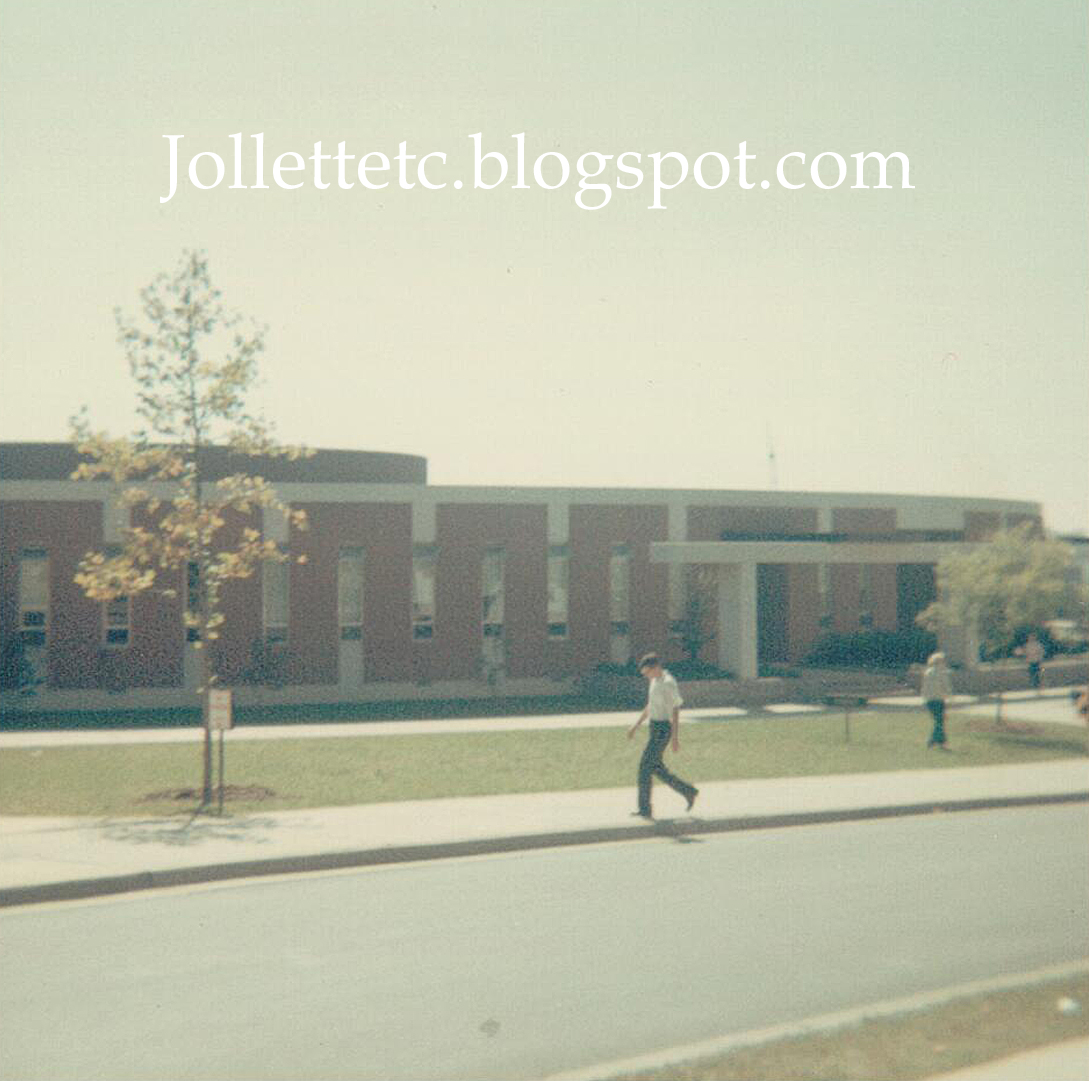
When I arrived at Madison College (now James Madison University – GO DUKES!), Gibbons Hall was a mere 5-years old.

Gibbons Hall JMU 1969  http://jollettetc.blogspot.com
Gibbons Hall -- the D-Hall October 1969
You would think people would have been used to the unusual architecture by then, but Gibbons continued to inspire debate. Round and constructed of brick, it was the first building to depart from the traditional bluestone Madison has become known for. Gibbons was also the first building on the new “back campus.” While a dining room was always available from the earliest years of the college, Gibbons was the first building dedicated to food. On the upper level, eight dining rooms were arranged like slices of pie around a central kitchen. The lower level housed the post office, bookstore, and lounge for day students.

It was during my freshman year that I met Hugh, Keith, and Tom. They were day students who no doubt took full advantage of that day lounge. With the aid of a student directory they made random phone calls to girls in the dorms just to see who would talk with them. Being the pathetic person that I am, I talked. Fast forward to my sophomore year. Hugh, Keith, and Tom were back to their old tricks calling girls again. They called. We talked.

Typical scene at meal time at the D-Hall in the 1970s
image from JMU Library Special Collections
One day I was at the D-Hall with friends. I saw the three guys plus one new one. The new guy was light-haired and had a big smile. He laughed a lot and seemed very friendly. He also had a big appetite. And why not? The food on our campus always ranked among the best in the nation according to the Princeton Review. Homemade rolls every night. Homemade apple dumplings – I always went back for seconds (and yes, thirds). Saturday lunch alternated between open-face roast beef sandwiches and subs. But I digress.

Later that night the phone rang, and it was those guys again. I mentioned that I noticed they had a new person with them and wondered who he was. Keith said, “Oh, that’s Barry. Do you want to date him?” Heck no – I was just making conversation.

Once inside Gibbons, hungry students
climbed these stairs to the D-Hall
It wasn’t long – a couple of days maybe – that I received a phone call from none other than the new guy. No telling what the others had told him about me. One call led to another. We talked many times without ever meeting. Even though I knew Barry on sight, he didn’t know me. He must have felt like a stalking victim whenever I said, “I saw you at the D-Hall.”

So finally Barry got up the nerve and asked me out – probably just to shake that eerie feeling of being watched. When I said, “Yes,” he added, “And if you see me, introduce yourself.”

That opportunity presented itself a day or two before our scheduled date. I was heading to the D-Hall for some lunch just as Barry was leaving. There he was – I had better say something, I thought. I have no recollection of what I said although Barry’s version of this story is, “Hi Barry, I’m your date.” I KNOW I would not have said that – it’s much too dorky, even for me. The part of the story that I remember is that he always told people that after we each went our merry way, he regretted not looking back to check out my legs. HA HA – the joke would have been on him as I was wearing an olive green plaid dress with olive green tights. Oh, smokin’ hot!

Gibbons Hall - where Barry and I first met
Yellow arrow: I was heading down the steps.
Purple arrow: Barry was leaving the D-Hall
and heading towards the steps.

And the rest is history. In those days there was no Match dot com. No e-Harmony. Still, lots of romances began at the D-Hall.

See who else is dining out at Sepia Saturday.


© 2015, Wendy Mathias.  All rights reserved.